

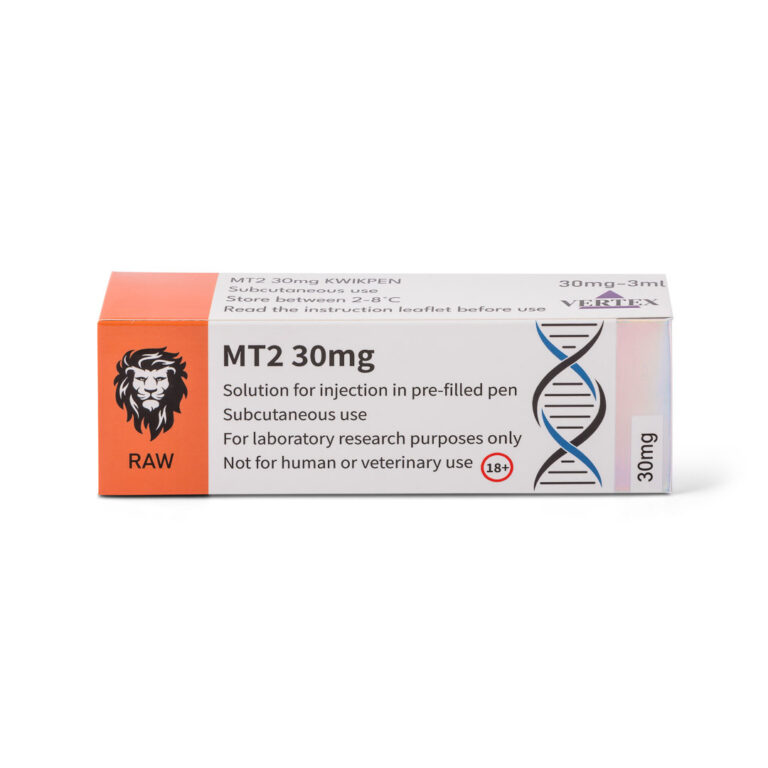
MT2 Peptide 30mg (R&D Only)
Original price was: $90.00.$80.00Current price is: $80.00.
MT2 Peptide 30mg (R&D Only)
MT2 Peptide (Melanotan 2) is a high purity synthetic analog of alpha melanocyte stimulating hormone. This advanced research peptide activates melanocortin receptors MC1R and MC4R, supporting studies in melanogenesis, pigmentation signalling, energy balance, and neurobiological pathways. Supplied as a lyophilised powder for laboratory research use only.
MT2 Peptide 30mg (Melanotan II): Research Overview, Scientific Background & Safety Guide
MT2 Peptide 30mg, also known as Melanotan II, has attracted scientific interest because of its activity at melanocortin receptors and its effects in experimental research. Originally developed as an investigational compound, Melanotan II has been studied for its influence on pigmentation pathways as well as several physiological processes regulated by the melanocortin system. This educational article explains the current scientific understanding of MT2 Peptide 30mg, its biological mechanism, laboratory quality considerations, research findings, and safety profile. Melanotan II is not approved by the U.S. Food and Drug Administration (FDA) for general medical use, and research peptide products are intended only for authorized laboratory research.
What is MT2 Peptide (Melanotan II)?
Melanotan II is a synthetic peptide analog of alpha-melanocyte-stimulating hormone (α-MSH). Researchers developed it to investigate the biological functions of melanocortin receptors, which regulate several physiological processes including pigmentation, energy balance, and appetite.
Although Melanotan II has been investigated in laboratory and clinical settings, it remains an investigational compound and is not an FDA-approved medication for general use.
Mechanism of Action & Melanocortin Receptor Binding
MT2 Peptide 30mg interacts with several melanocortin receptor subtypes, particularly MC1R, MC3R, MC4R, and MC5R.
These receptors are involved in numerous biological processes, including:
- Melanin production
- Energy regulation
- Appetite signaling
- Neuroendocrine function
- Skin pigmentation
Researchers continue studying how activation of these receptors influences human physiology.
Key Research Areas
Scientific studies involving Melanotan II have explored several areas, including:
- Pigmentation biology
- Melanin synthesis
- Appetite regulation
- Energy metabolism
- Neuroendocrine signaling
Many findings remain investigational, and further research is needed to establish safety and efficacy for specific clinical applications.
Product Specifications & Laboratory Quality
Research-grade MT2 is commonly supplied as a lyophilized (freeze-dried) peptide intended for laboratory investigation.
Researchers evaluating peptide materials often consider:
- Product identity
- Batch consistency
- Analytical testing
- Manufacturing quality
- Stability information
- Storage recommendations
These quality indicators help support reliable scientific research.
Chemical Profile
Melanotan II has a well-characterized molecular structure that has been extensively described in scientific literature.
Laboratory documentation may include:
- Product identification
- Batch number
- Analytical methods
- Identity testing
- Purity assessment
Researchers should consult manufacturer documentation and peer-reviewed literature for detailed chemical information.
Why Purity and Certificate of Analysis Matter
High-quality research materials are generally accompanied by analytical documentation such as:
- Certificate of Analysis (CoA)
- High-performance liquid chromatography (HPLC)
- Mass spectrometry (MS)
- Identity confirmation
- Batch-specific testing
These documents assist researchers in verifying product identity and analytical quality.
Storage and Laboratory Handling
Maintaining appropriate storage conditions helps preserve peptide integrity during laboratory research.
General laboratory practices include:
- Following manufacturer storage recommendations
- Protecting materials from excessive heat, moisture, and direct sunlight
- Maintaining recommended storage temperatures
- Recording handling procedures as part of laboratory quality systems
Specific storage requirements vary depending on the manufacturer and laboratory protocol.
MT2 Peptide 30mg Research Findings & Safety Profile
Researchers have investigated Melanotan II across several experimental settings.
Areas of study include:
- Pigmentation pathways
- Melanocyte biology
- Appetite regulation
- Neuroendocrine signaling
Although experimental findings have generated scientific interest, Melanotan II has not been approved as a treatment for these purposes.
Reported Risks and Adverse Effects
Clinical and observational reports have described adverse effects associated with Melanotan II exposure, including:
- Nausea
- Flushing
- Reduced appetite
- Fatigue
- Headache
There have also been concerns regarding changes in moles and skin pigmentation. Because of these concerns, individuals should not self-administer investigational compounds outside approved research settings.
Researchers continue evaluating the long-term safety profile of Melanotan II.
Melanotan I vs. Melanotan II (MT2 Peptide 30mg)
Melanotan I and Melanotan II are related compounds but differ in receptor activity and research focus.
| Feature | Melanotan I | Melanotan II |
|---|---|---|
| Structure | α-MSH analog | α-MSH analog |
| Receptor Activity | More selective | Broader melanocortin receptor activity |
| Research Focus | Pigmentation | Pigmentation and broader melanocortin signaling |
Although both compounds are used in research, they are distinct molecules with different pharmacological profiles.
Frequently Asked Questions
What is MT2 Peptide 30mg Peptide 30mg?
It is a research-grade formulation of Melanotan II intended for authorized laboratory research.
Is Melanotan II FDA approved?
No. Melanotan II has not been approved by the U.S. FDA for general medical use.
What is a Certificate of Analysis?
A Certificate of Analysis is a laboratory document that typically includes identity testing, purity results, analytical methods, and batch information.
Why is HPLC testing important?
High-performance liquid chromatography helps verify peptide identity and purity, supporting laboratory quality assurance.
Is MT2 Peptide 30mg legal for research?
The legal status of research peptides varies by jurisdiction and intended use. Researchers should follow applicable laws, institutional policies, and regulatory requirements.
Conclusion
MT2 Peptide 30mg remains an active area of scientific investigation because of its interaction with melanocortin receptors and its potential role in pigmentation and metabolic research. Ongoing studies continue to expand understanding of its biological effects, while emphasizing the need for further safety and efficacy data. Researchers working with investigational peptides should prioritize analytical quality, batch-specific Certificates of Analysis, and adherence to established laboratory standards. For the most reliable information, consult peer-reviewed scientific literature, regulatory guidance, and manufacturer documentation.
Be the first to review “MT2 Peptide 30mg (R&D Only)”
Related products
Raw Peptides
Synedica

Alluvi Peptides

Alluvi Peptides
Raw Peptides
Raw Peptides
Alluvi Peptides
Synedica
Reviews
There are no reviews yet.