
Glow Peptide GHK-Cu 70mg: The Ultimate Guide to Copper Peptides & Skin Research
Glow Peptide GHK-Cu 70mg has attracted growing scientific interest because GHK-Cu is one of the most extensively studied copper peptides in regenerative and dermatological research. Since its discovery, researchers have investigated its potential role in tissue repair, extracellular matrix remodeling, collagen production, and skin biology. Moreover, studies continue to explore its effects on wound healing, skin appearance, and hair follicle function. This educational guide explains the science behind Glow Peptide GHK-Cu 70mg, current research findings, laboratory quality considerations, and important safety information. Products marketed as research peptides are intended solely for laboratory research and are not approved medications for general consumer use.
The Science Behind GHK-Cu
Glow Peptide GHK-Cu 70mg, short for glycyl-L-histidyl-L-lysine copper, is a naturally occurring copper-binding peptide found in human plasma, saliva, and urine. Researchers have investigated this peptide for decades because of its potential involvement in tissue maintenance and repair.
As people age, naturally occurring GHK-Cu levels decline. This observation has prompted further scientific investigation into its biological activity and potential applications in regenerative research.
Gene Regulation and Collagen Synthesis
One area of ongoing research involves GHK-Cu collagen stimulation research.
Experimental studies suggest GHK-Cu may influence biological pathways associated with:
- Collagen production
- Extracellular matrix remodeling
- Wound repair
- Cellular signaling
- Skin structure
- Tissue regeneration
Researchers continue investigating how these mechanisms contribute to healthy skin biology.
Importantly, many findings come from laboratory and early-stage clinical studies, and additional research is needed to better understand their clinical significance.
Skin and Scalp Research
Researchers have also explored GHK-Cu in studies involving:
- Skin texture
- Elasticity
- Fine lines
- Photoaged skin
- Hair follicle biology
- Scalp health
Several investigations have examined GHK-Cu hair growth and scalp peptide applications, although evidence continues to evolve and outcomes may vary depending on study design.
Likewise, studies evaluating GHK-Cu peptide for skin glowing focus on biological processes such as collagen remodeling, antioxidant activity, and tissue repair rather than cosmetic outcomes alone.
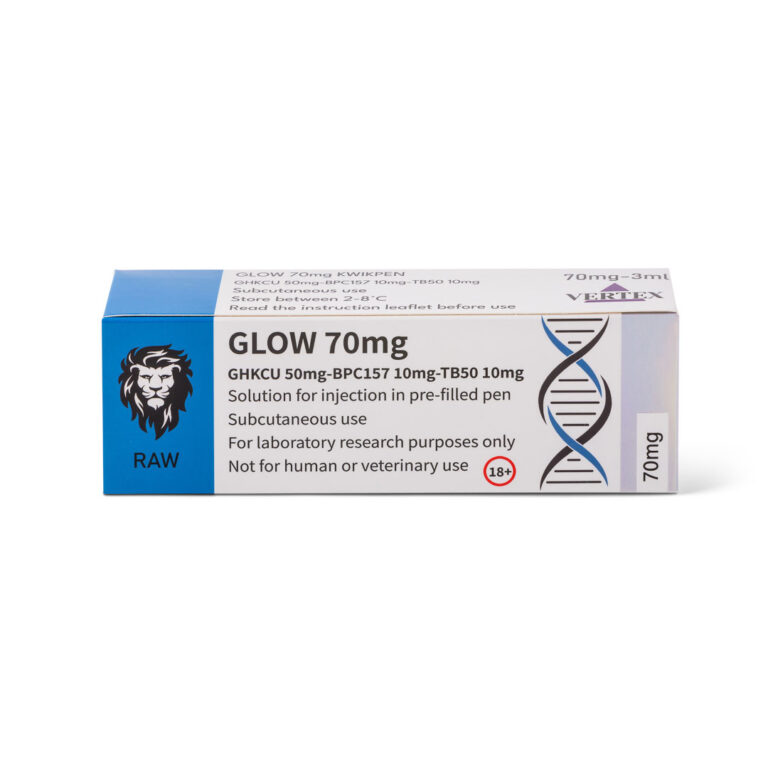
Glow Peptide GHK-Cu 70mg Product Overview
Glow Peptide GHK-Cu 70mg is commonly supplied as a lyophilized (freeze-dried) powder for laboratory research.
Lyophilization helps preserve peptide stability before laboratory preparation and facilitates storage under manufacturer-recommended conditions.
Researchers evaluating peptide materials generally consider:
- Product identity
- Batch consistency
- Purity documentation
- Analytical testing
- Manufacturing quality
- Stability information
These factors contribute to reliable laboratory research.
Research Grade GHK-Cu Lyophilized Powder
Research laboratories often use lyophilized peptides because freeze-drying supports stability during storage and transportation.
Documentation accompanying research materials may include:
- Product specifications
- Batch information
- Storage recommendations
- Analytical testing
- Manufacturing records
Researchers should follow manufacturer guidance and institutional laboratory procedures when handling investigational materials.
Purity, Color, and HPLC Testing
A characteristic blue color is commonly associated with copper-bound GHK-Cu because of the presence of copper ions within the peptide complex. While appearance may provide a visual indication of copper binding, color alone cannot confirm identity or purity.
Researchers generally rely on analytical testing, including:
- High-performance liquid chromatography (HPLC)
- Mass spectrometry (MS)
- Identity confirmation
- Batch-specific Certificates of Analysis (CoA)
A GHK-Cu 70mg HPLC purity COA can help verify product identity, purity, and manufacturing consistency for research purposes.
Storage and Laboratory Handling
Proper storage supports peptide stability throughout laboratory research.
General laboratory recommendations include:
- Following the manufacturer’s storage instructions.
- Protecting materials from excessive heat, moisture, and direct sunlight.
- Maintaining recommended storage temperatures.
- Recording storage conditions as part of laboratory quality procedures.
Specific handling requirements vary depending on the manufacturer and research protocol.
Current Research Findings
Glow Peptide GHK-Cu 70mg continues to be investigated across multiple scientific disciplines.
Areas of ongoing research include:
- Skin biology
- Tissue repair
- Wound healing
- Collagen synthesis
- Hair follicle biology
- Oxidative stress
- Extracellular matrix remodeling
Although numerous laboratory and clinical studies have reported promising findings, additional high-quality research is needed to clarify long-term efficacy and safety in specific applications.
Safety Considerations
Glow Peptide GHK-Cu 70mg research has generally reported favorable tolerability in many topical research settings. However, safety depends on numerous factors, including formulation, route of administration, study design, and participant characteristics.
Because research peptide products differ from approved medications, they should be used only in accordance with applicable research regulations and institutional guidelines.
Frequently Asked Questions
What is Glow Peptide GHK-Cu 70mg?
It is a research-grade formulation containing the copper peptide GHK-Cu for authorized laboratory research.
Why is GHK-Cu called the “Glow Peptide”?
The nickname reflects scientific interest in its potential role in skin biology, collagen remodeling, and tissue repair. It is not an established medical or regulatory designation.
What is a Certificate of Analysis?
A Certificate of Analysis is a laboratory document that typically includes batch identification, purity results, analytical methods, and identity testing.
What does HPLC testing verify?
High-performance liquid chromatography helps researchers assess peptide purity and confirm product quality as part of laboratory quality assurance.
Is Glow Peptide GHK-Cu 70mg approved for medical use?
The regulatory status of GHK-Cu depends on the specific formulation and jurisdiction. Products sold as research peptides are intended for laboratory research and are not approved as general consumer medicines.
Conclusion
Glow Peptide GHK-Cu 70mg remains one of the most extensively researched copper peptides because of its potential role in tissue repair, collagen biology, and regenerative science. As research continues to evolve, scientists are gaining a better understanding of its molecular mechanisms and possible applications in dermatology and tissue engineering. Researchers evaluating GHK-Cu should prioritize high-quality analytical documentation, batch-specific Certificates of Analysis, and adherence to established laboratory standards. For the most reliable information, consult peer-reviewed scientific literature, regulatory guidance, and manufacturer documentation.
Be the first to review “Glow Peptide GHK-Cu 70mg”
Related products
Raw Peptides
Raw Peptides
Raw Peptides
Alluvi Peptides
Raw Peptides
Synedica
Alluvi Peptides
Synedica
Reviews
There are no reviews yet.