

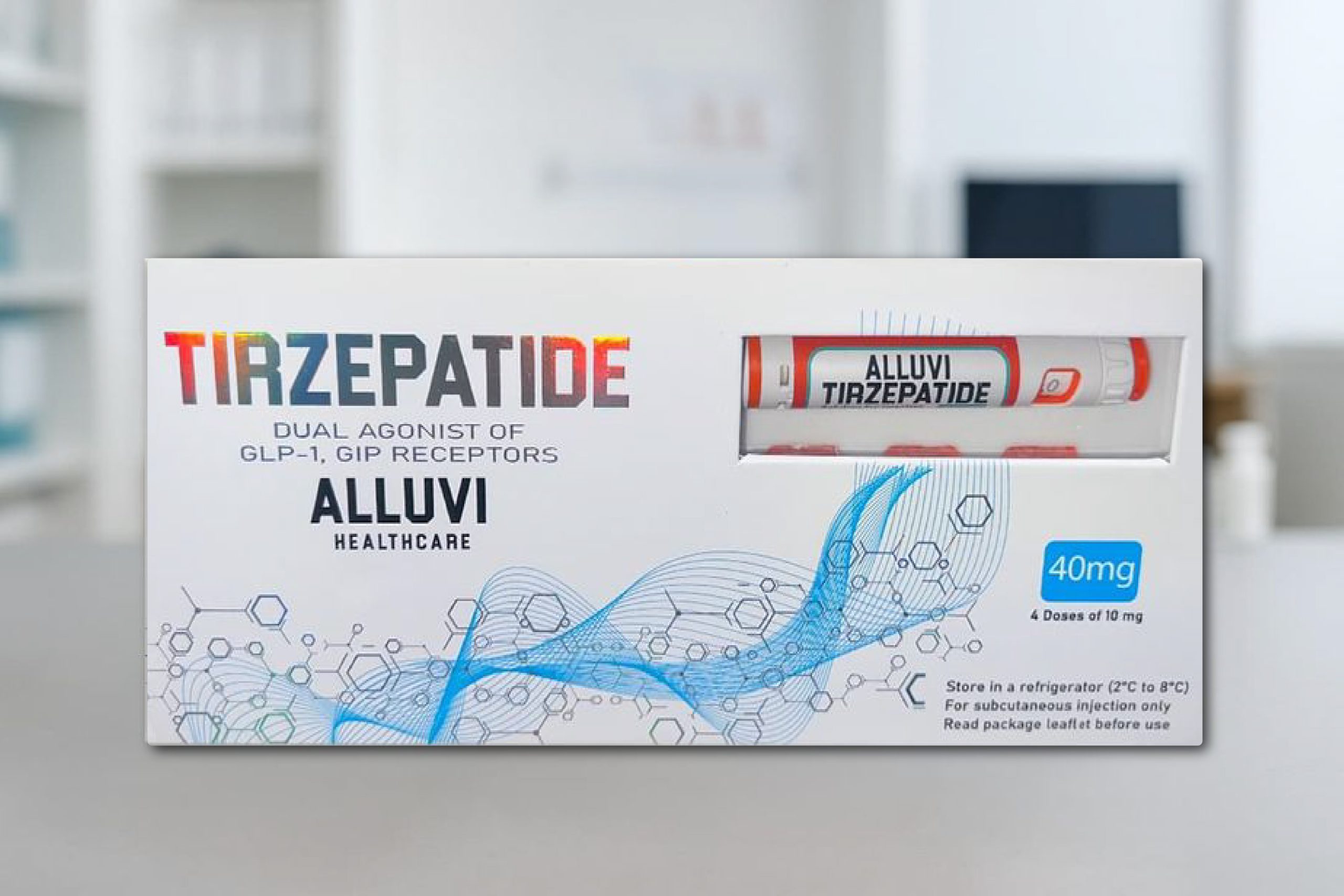
Alluvi Tirzepatide Peptide 40mg (R&D Only)
Price range: $110.00 through $910.00
Alluvi Tirzepatide Peptide 40mg (R&D Only)
- Pre-filled Tirzepatide 40mg Research Pen (4 doses of 10mg)
- Janoshik Certificate of Analysis
- MSDS (Material Safety Data Sheet)
- Reconstitution and storage guidelines
- Research information sheet
Alluvi Tirzepatide Peptide 40mg: The Complete Research Guide
Alluvi Tirzepatide Peptide 40mg has become an important topic in metabolic research because scientists continue to investigate its dual receptor activity and potential role in obesity and type 2 diabetes research. Moreover, as interest in incretin-based therapies grows, researchers are examining how Tirzepatide differs from earlier peptide therapies and what makes it unique from a scientific perspective. This educational guide explains the current evidence surrounding Alluvi Tirzepatide Peptide 40mg, its mechanism of action, laboratory quality considerations, and current regulatory status. Research peptide products are intended only for authorized laboratory research, and Tirzepatide research materials are distinct from FDA-approved prescription medications.
What is Tirzepatide?
Tirzepatide is a synthetic peptide that has been extensively studied for its effects on glucose metabolism, appetite regulation, and body weight. It functions as a dual GIP/GLP-1 receptor agonist peptide, meaning it activates two naturally occurring hormone receptors involved in metabolic regulation.
Researchers continue studying Tirzepatide across multiple clinical programs involving obesity and metabolic disease.
Dual GIP GLP-1 Receptor Agonist Peptide
Unlike therapies that target only the GLP-1 receptor, Tirzepatide activates both:
GLP-1 Receptor
Research has associated GLP-1 receptor activation with:
- Appetite regulation
- Delayed gastric emptying
- Glucose-dependent insulin secretion
These mechanisms contribute to ongoing investigations into metabolic health.
GIP Receptor
The GIP receptor is involved in several physiological processes, including:
- Insulin signaling
- Glucose metabolism
- Energy regulation
Scientists continue exploring how simultaneous activation of GLP-1 and GIP receptors may influence metabolic outcomes.
Tirzepatide vs. Semaglutide Peptide Comparison
A common research question concerns the differences between Tirzepatide and Semaglutide.
| Therapy | Receptors Targeted | Regulatory Status |
|---|---|---|
| Semaglutide | GLP-1 | FDA-approved for certain indications |
| Tirzepatide | GLP-1 + GIP | FDA-approved prescription formulations exist for certain indications; research peptide products are separate investigational materials |
Although both compounds affect metabolic signaling, their receptor activity differs. Researchers continue evaluating these differences in peer-reviewed clinical studies.
Advantages of the 40mg Research Format
Alluvi Tirzepatide Peptide 40mg is commonly supplied as a lyophilized (freeze-dried) powder for laboratory research.
Lyophilization helps improve stability before laboratory preparation and facilitates transportation when stored according to manufacturer recommendations.
Researchers often evaluate:
- Batch consistency
- Product identity
- Purity documentation
- Stability information
- Manufacturing quality
These characteristics contribute to confidence in research materials.
High Purity Tirzepatide Lyophilized Powder
Quality documentation is an essential component of peptide research.
Researchers frequently review:
- Certificate of Analysis (CoA)
- High-performance liquid chromatography (HPLC)
- Mass spectrometry (MS)
- Batch numbers
- Identity confirmation
- Purity testing
Transparent analytical documentation helps verify that research materials meet stated laboratory specifications.
HPLC Tested Alluvi Tirzepatide Peptide 40mg COA
A Certificate of Analysis provides important information regarding laboratory testing.
Typical sections include:
- Product identification
- Batch number
- Analytical methods
- Purity results
- Identity confirmation
- Laboratory approval
Batch-specific reports support quality assurance and reproducibility in research.
Storage and Laboratory Handling
Proper storage supports peptide integrity throughout laboratory research.
General recommendations include:
- Following manufacturer storage instructions.
- Protecting materials from excessive heat, moisture, and direct sunlight.
- Maintaining recommended storage temperatures.
- Documenting handling procedures as part of laboratory quality systems.
Specific storage requirements may vary depending on the manufacturer and research protocol.
Clinical Research
Published clinical studies continue to evaluate Alluvi Tirzepatide Peptide 40mg across multiple therapeutic areas.
Researchers have investigated:
- Body weight
- Blood glucose regulation
- Insulin sensitivity
- Cardiometabolic markers
- Lipid metabolism
- Metabolic health
These investigations remain ongoing, and additional long-term evidence continues to emerge.
Current Evidence
Clinical research has demonstrated meaningful improvements in several metabolic outcomes under carefully controlled study conditions. However, study findings should not be interpreted as guaranteed results for individuals, and further research is needed to clarify long-term efficacy and safety.
Safety Profile
Like other incretin-based therapies, Alluvi Tirzepatide Peptide 40mg has been associated with gastrointestinal adverse events in clinical trials.
Commonly reported effects include:
- Nausea
- Vomiting
- Diarrhea
- Constipation
- Reduced appetite
- Gastrointestinal discomfort
Researchers continue monitoring safety outcomes in ongoing studies.
Frequently Asked Questions
What is Alluvi Tirzepatide Peptide 40mg?
It is a research peptide formulation intended for authorized laboratory investigation involving Tirzepatide.
What makes Alluvi Tirzepatide Peptide 40mg different?
Tirzepatide activates both GLP-1 and GIP receptors, while some other therapies target only the GLP-1 receptor.
What is a Certificate of Analysis?
A Certificate of Analysis is a laboratory document that typically includes identity testing, purity results, analytical methods, and batch information.
Is Tirzepatide FDA approved?
FDA-approved prescription formulations of tirzepatide are available for certain medical indications. Research peptide products are distinct and are intended only for laboratory research.
Why is analytical testing important?
Analytical testing helps researchers verify product identity, purity, and batch consistency, supporting reliable laboratory work.
Conclusion
Alluvi Tirzepatide Peptide 40mg continues to be an important subject of scientific investigation because of its dual GIP/GLP-1 receptor activity and the growing body of clinical evidence surrounding metabolic research. Moreover, researchers evaluating peptide materials should prioritize transparent analytical documentation, Certificates of Analysis, and adherence to established laboratory quality standards. As research evolves, consulting peer-reviewed publications, regulatory updates, and manufacturer documentation remains essential for understanding this developing field.
| Box | Box, 3 Boxes (Save 15%), 10 Boxes (Save 25%) |
|---|
Be the first to review “Alluvi Tirzepatide Peptide 40mg (R&D Only)”
Related products
Alluvi Peptides
Raw Peptides
Raw Peptides
Synedica
Alluvi Peptides
Synedica
Alluvi Peptides
Alluvi Peptides
Reviews
There are no reviews yet.